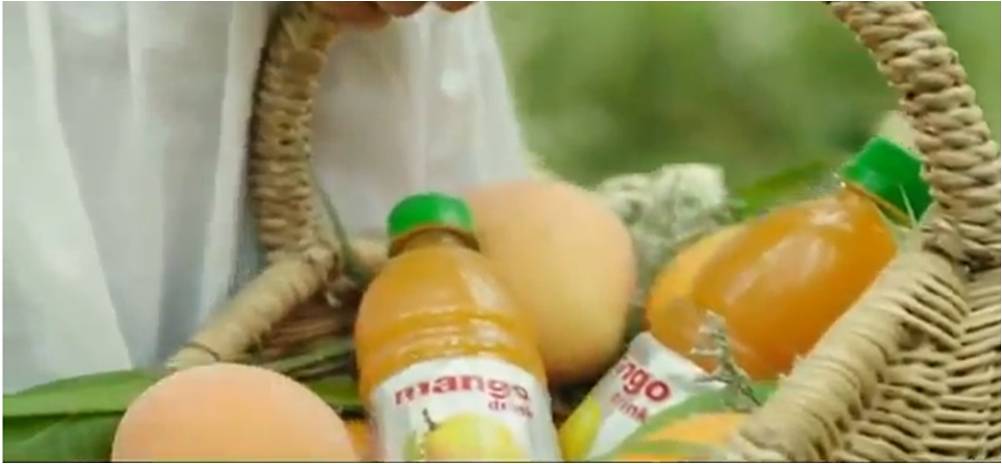
From the ad, I understand that Slice is particularly worried about Maaza rather than Frooti. My assumption is based on the visual showing bottle similar to Maaza in the new Slice TVC.Wednesday, 20 March 2013
Brand Update : Slice ditches Aamsutra under competitive pressure
From the ad, I understand that Slice is particularly worried about Maaza rather than Frooti. My assumption is based on the visual showing bottle similar to Maaza in the new Slice TVC.Saturday, 9 February 2013
Brand Update : Sprite continues its Bakwaas
Monday, 4 May 2009
The Coca-Cola University: Parivartan

FMCG companies in India are all looking towards increasing their penetration into rural markets. Coke, the world's largest non-alcoholic beverage company is looking at semi-urban and rural markets as its future growth paths.
The 'Parivartan' program- targeting retailers
Coke's new strategy involves training retailers in a program launched by the Coca-Cola University. In 2007, the company launched Coca-Cola University — a virtual, global university for all learning and capability-building activities.
The company calls this the "parivartan" program (meaning "Change" in English). Shop owners (traditional retailers) are given training on displaying and stocking products well. The goal of the innovative training program is to provide traditional Indian retailers with the skills, tools and techniques required to succeed in a constantly changing retail scenario.
Presentations (including audio/visual technology) in local Hindi language help small retailers (with stores less than 200 square feet in average size) to better understand the concepts involved. Each retailer also receives a Coca-Cola "Certified Retailer" certificate at the conclusion of the program.
The program, which debuted on Dec. 18 in Agra, will equip "mom-and-pop" shop owners with the skills, tools and techniques required to succeed in India's evolving retail landscape. All invited retailers attended the session, which allowed them to learn in a formal setting using leading-edge audio/visual technology and engaging presentations conducted in the local Hindi language.
Here are some of them: print a visiting card with your telephone number; around 80% of your business comes from 20% of your products, so build up visibility for these; try and display posters of discounts; organise a home delivery facilty; be courteous to your customers-SundayET. The content is structured around the four pillars of retail—customer, shop, stock and finance.
And this seems to be just the tip of the iceberg. The programme has covered 20,000 retailers in North India so far. “Based on their feedback we are developing ‘Advanced Parivartan’ that will cover issues like shop layout and location, display, basics of finance, knowledge of credit card transactions, people management skills, among others.
For Coca-Cola it’s a big pie. There are around 12 million retailers in the country, out of which kirana stores account for over 90% of the Rs 7,40,000-cr retail business in India. But a company official maintained that these retailers would not be pushed to stock Coca-Cola products through this programme. Some of these retailers don't even stock soft drinks.
The idea was supposedly born out of a meeting at the World Economic Forum in Davos around two years ago when Coke’s global chief met the commerce minister of India and suggested running the programme in India. Also, as a token of goodwill gesture, an accidental death insurance of Rs 1 lakh is being provided free of cost to all the attending retailers as a protection against any eventualities.
In bigger cities the company has conducted Parivartan programme in classrooms or by hiring hotels. The classroom Parivartan programme has been organised across cities in UP and Punjab -Agra, Ludhiana, Chandigarh, Amritsar, Gorakhpur, Lucknow, Bareilly, Haldwani, Bilaspur, Kolkata, Faizabad, and Rajamundry.
The ‘Coca-Cola University on Wheels’ has also covered small towns such as Hoshiarpur, Mukeria, Nakodar, Phagwara, Nawanshahar, Malerkotla, Barnala, Khanna, Moga, Jalandhar, among others. Going forward in the future, Coca-Cola’s plan is to scale up this initiative by taking it across India.
http://article.wn.com/view/2009/05/03/CocaCola_India_launches_CocaCola_University_on_Wheels/
http://economictimes.indiatimes.com/Features/The-Sunday-ET/Coca-Cola-India-launches-Coca-Cola-University-on-Wheels/articleshow/4477620.cms
http://www.casestudyinc.com/Articles/Coke-Strategy-Training-Retailers.html
http://www.thecoca-colacompany.com/citizenship/news_india_retailers.html
Tuesday, 23 October 2007
Tropicana Twister Vs. Minute Maid

Indian Market Size:
Juices and Fruit Drinks: Rs 5,000 crore
Carbonated drinks: Rs 6,000 crore (cola, lime and orange)
A huge chunk of the Juices and Fruits drinks is unorganized, with respect to volume almost 90%.
Pepsi's Strategy
The launch of Twister, already successful in Vietnam, will do more than add another brand to the shelves. It will mark Pepsi’s entry into a segment in India that has opened up with the entry of Minute Maid, which, full of orange pulp, is neither pure juice like Tropicana nor plain fruit drink like Coke’s own mango drink Maaza. Unfortunately, this new brand Twister can be ill-equipped in order to take on Minute Maid in order to maintain a competitive advantage due to its association with the brand Tropicana. Tropicana Twister might be perceived as an extension to the pure juice family of Tropicana. Twister is also similarly named to Dabur Real's Twist, which hosts a combination of fruits for its juices range.
Coca Cola's Strategy
Coca-Cola might be testing its Maaza Aam Panna in UP, but this is not in direct response to Twister in any way. It is more an innovative attempt to capture new markets. Coca-Cola has a successful new brand in Minute Maid, with the product complementing the good promotional campaign during its rollout. Coca-Cola should not just concentrate on Pepsi as a competitor, but it should look at Real Twist too, which is currently being pushed heavily by the Retailers/Traders due to some excellent activation strategies by Dabur.
Coca-Cola: “Little Drops of Joy”

Coca-Cola India unveiled its ‘5-Pillar’ growth strategy to further strengthen its bonds with India. The strategy focuses on People, Planet, Portfolio, Partners and Performance. The Company announced a range of initiatives under each of the 5 pillars and also unveiled its integrated communication initiative-“Little Drops of Joy” which aims to reinforce the Company’s ‘connect’ with stakeholders in India using a single platform. Each initiative that announced are drops of a larger vision aimed at mutual growth and development. Over the last few years, the company continuously engaged with a large number of stakeholders and has incorporated their learnings in refining its strategy for India. The integrated communication platform of “Little Drops of Joy” is a tribute to their valuable inputs and truly depicts what the Company has always stood for.
‘Little drops of joy’ is also about mother-branding the offering from the house of Coke. In many ways, the campaign is a company campaign. I will not call it a corporate campaign, but it certainly is about all the brands that Coke has to offer in India. In some ways, it subliminally establishes a wee bit of distance from being painted into the corner of a cola image alone. There is more to Coca-Cola than Coke. Coca-Cola sure wants that.
In many ways, the little drops of joy could be a Kinley mineral water today and a vitamin-enriched offering in water tomorrow. It is certainly about all the other drinks in its portfolio of the carbonated kind, orange, lime and everything else included. It is about its latest offering, Minute Maid, just as it is about any other beverage it will offer in the future. Coffee is but one. There could be others.
Unfortunately it I feel the Coke mistake continues by bringing in all its brands under one platform, instead of offering distinct differentiation. It could be very good for Coke and Sprite, but might be detrimental to Kinley or the newly launched Minute Maid. Ultimately, a Coke need not position itself as a soft-drink for everyone, it just needs to be consumed by everyone.