Showing posts with label SEO. Show all posts

Tuesday, 29 December 2015

SEO Made Simple 2016

Many people are wondering if SEO, search engine optimization, still matters.  As someone who's been focused on SEO for a long time, I can definitely say it's essential for success. However, the process of optimizing your website and the process for doing so has radically changed.

Back in the day you could trick search engines into believing that your website had more authority than your competitors. Authority is essentially Google's way of assessing a point value to indicate site popularity. Google has become much more sophisticated and trying to put one over on them is a waste of time.

One of the most fundamental changes in search engine optimization is local optimization. Thanks to the proliferation of mobile devices, most searches using search engines have some type of local intent. This type of search query has changed the Google algorithm and ranking factors. Even if you are a national business, you must think locally and optimize for local search.

The second area that have evolved over the last few years is content.  As I talk about in SEO Made Simple (audio version), content is the driving force behind site authority and valuation.  The more engaging content you produce, the more users will stay on your site, interact with, and share your web pages. This had a dramatic and lasting impact on search engine results.

When people ask me for my optimization advice, I always point to the two items above, local optimization and content creation. When these two factors are at the heart of your optimization strategy, you can influence search engine rankings.

What about those old SEO tactics?

If you're still getting emails from India promotion number one Google rankings, there's probably a bunch of outdated tactics behind it. The best case scenario is that you don't get penalized when these companies start posting links to your website all across the internet. The worst case scenario is that Google catches on (and they will), banning your site.

I've found that websites who have received a Google penalty rarely, if ever, fully recover.  Is it worth the risk?  No, definitely not.  My recommendation is always to learn SEO best practices and either implement them on your own or simply hire a reputable firm to implement specific tactics like blogging, digital assets, etc. under your supervision.

To be successful with search engine optimization, you need to take a fresh approach. Focus on how to build quality information online that others want to interact with. When you do, you'll naturally attract links to your website or blog and improved organic rankings will follow.

Monday, 17 August 2015

SEO Made Simple 5th Edition Review

When people think about search engine optimization (SEO), they can't help but do a quick Google search for information that can help improve organic rankings.  When looking online for SEO resources, you'll likely find conflicting information - this is why it's so helpful to use a simple guide that only shares the best practices for improving website rankings.

SEO Made Simple 5th Edition

There's lots of information available online on SEO best practices.  However, information related to the organic search changes regularly as Google improves their ranking algorithm. As such, the best place to find the latest and most accurate information is by follow leading SEOs who work across numerous websites and industries - specifically within the SEO field. This ensures access to the most effective strategies from those getting real-world results. 


SEO Made Simple 5
In this book, SEO Made Simple (5th Edition), you'll discover the latest information on optimizing your website for improved organic rankings. It's designed to cut through the clutter and misinformation that can be difficult to navigate. The book has been recently updated to educate those interested in search engine optimization in both the standard optimization techniques required to get them most from your website as well as advanced techniques to further enhance organic results.

There are a number of topics that have been updated to further enhance SEO results for your website. An updated section on developing an authoritative link profile is worth 10x the book's value as it shows how you can easily attract quality links to your site. This improves website authority and organic rankings.

The second area that has been significantly update is the information on local  and mobile search which is now driving more than half of all search engine traffic. If you are a business owner or trying to promote your business online, this is critical to the success of your organic marketing.

People who purchase SEO Made Simple 5th Edition will be impressed with the level of detail and simplicity related to learning and implementing effective search engine optimization strategies.  The book has been updated for 2016, reflecting this year's changes as well as pre-planning for upcoming changes announced for next year.  

Pros:  

--SEO Made Simple (5th edition) has been updated with the latest techniques for proper search engine optimization.
--The book has been updated to include information on local and mobile search.
--Strategies included have been proven effective across thousands of websites.
--Top selling book in the category, more than 30,000 sold.
--Techniques are presented in a very simple format, ideal for beginners and intermediate SEOs who want to improve organic rankings.
--Additional resources are included with the book at no additional cost.

Cons: 
--None to mention

Get started today optimizing your website, blog, and other digital assets.  Join the tens of thousands of individuals enjoying more organic traffic thanks to the powerful strategies revealed in this top-selling SEO guide.  SEO Made Simple 5th Edition is the best SEO book available today.

Thursday, 2 July 2015

8 Tactics To Help Manage Your Marketing Campaigns & Boost ROI


As digital marketing becomes more complex, the more difficult it becomes for businesses to
manage an effective budget. Spreading resources across every avenue of the industry is a 
difficult task, and it can lead to key areas being neglected. 

Why is it important to get campaigns right? In 2014 marketing budgets went up by 10% - by 
2016 it’s expected to make up 35% of the average businesses’ budget. Maximizing your 
strategy for strong ROI is now all important, and understanding how to get a shrewd plan 
together should be at the center of any business plan. 

In this 8 point guide the vital tactics which can make a campaign work are explained. It’s an 
insight on how to spread a digital marketing budget across the right areas, ensuring the best chance of excellent ROI. 

1. Get A Plan In Order

Many businesses (particularly start-ups) have a habit of launching into digital marketing 
campaigns without a thorough plan. The idea of winging it and expecting good results can betempting, but the fact is it is essential you work out what your objectives are.

Promoting brand awareness and increasing conversion rates tend to be the key goals, but how do you intend to achieve this? Can it be managed on a long term scale? Who are you going to employ to make it happen? 

The questions can pile up, and there’s also the need to manage a budget between the likes of social media, PPC, and SEO. Knowing where your business needs to focus is the essence of a strong digital marketing plan, which means you need to understand your audience. 

2. Research Your Industry 

One of the forgotten factors is not all businesses can work with SEO and PPC. Not everyone is always looking for the keywords you may want to rank for, meaning there is no point in funding a SEO campaign. Conversely, a PPC strategy won’t work if you have low margins –all this tends to do is lose you money.

The solution to this is to understand your audience and get to know what your competitors are doing. Examine the market and your position in it – how authoritative do you genuinely see yourself? If you’re entering an established and competitive market, for example, then PPC is a great way to learn which keywords to focus on. In turn, this can shape your SEO efforts. 

3. Get Your SEO Structured

Capturing key SERPs is what SEO is all about. SEO is more sustainable than PPC, the problem is the results take quite a while to show, and you run the risk of facing a Google penalty if you get it badly wrong (such as with Black Hat SEO – steer well clear of it).  

For start-up businesses Google uses a cautious tactic to wait and see how the new site 
develops. Many new businesses can fold and the site is essentially abandoned – if this isn’t 
your plan, get on with SEO before your launch: ensure your site is streamlined on a technical front, is mobile-friendly, and structure excellent on-site content. 

Off-site work is also vital – with online buzz around your business, the signals sent to Google will be positive and will assist your ranking. In the meantime, PPC can generate interest in your site whilst Google’s algorithms crawls your site and organic traffic builds up. 

4. PPC Will Always Back You Up

PPC is a safety net of sorts as it can be used to drive relevant traffic to your site. In moments of marketing uncertainty, turn to PPC – even a budget of $1,000 based around broad keywords can have significant results. 

This tactic can help you understand top-performing keywords and popular new ones (again, 
which comes in useful for SEO activities). However, do be aware if you’re a B2B company 
as competition is rife and prices can be extremely high. Respect your budget and see what 
you can achieve with it. 

5. Take A Look Into PPC For Mobile

With Google’s mobile algorithms now in place (benefiting sites with mobile-friendly sites), 
now is the time to capitalize on mobile marketing features. For mobile PPC, there are brilliant CTA options which come in particularly useful for lead generation. 

6. Use The Power Of Remarketing

Setting aside budget for remarketing is another essential tactic which, when deployed 
properly, can deliver great results. Your marketing efforts can’t always win over your 
audience, as many will visit your site, show some interest, but then leave.

Remarketing is an unobtrusive way to get back into their field of vision – setting up tracking 
codes can ensure they return to your site with subtle imagery and clever wording. 

7. Take To Content Marketing With A Flourish

Having good content is now more important than ever. Google’s algorithms will notice poor 
copy and send the site plummeting down SERPs - sculpting quality content through a White 
Hat SEO campaign can build a strong link catalog, boost your authority, and have a steady stream of CTA driven social media output going. 

8. Recognize Key Social Media Tools 

Most businesses are on Facebook and Twitter – this is a given. However, many brands don’t put the effort in to taking advantage of other formats, such as Pinterest, LinkedIn, Instagram, YouTube, and even the likes of FourSquare. 

YouTube, as an arbitrary example, offers an advertising format where companies can tap into utterly vast audiences. It remains largely underused by brands, so try setting aside some budget to get in front of a site which has a hundreds of millions of views a day. With its localized options and specific targeting services, you can effortlessly focus in on your 
demographic.   

Use This Handy 8 Point Guide To Keep Everything On Track

Now we’ve highlighted the areas to focus on, it’s time to take action and make sure your 
budget is spread over the most crucial areas of digital marketing. To get things moving you 
can:

1. Identify if your business is better suited to SEO or PPC – if both, set aside your 
budget appropriately. 
2. Setup a PPC campaign to identify keywords which and relevant to you and, 
importantly, convert.
3. Take the data from this to develop your on-site SEO efforts.
4. Set aside budget for off-site SEO/
5. Begin a major PPC campaign to attract your target consumers.
6. Monitor your progress in Google’s SERPs – perhaps subscribe to Moz to have 
detailed results of your search rankings. You can adjust your PPC expenditure based 
on the results, and focus your efforts on SEO areas which need work.
7. Put in place a remarketing campaign which will boost your conversions. 
8. Don’t forget about your mobile opportunities – accommodate your budget towards 
appealing to this vast audience. 

The award winning Soap Media is a digital marketing specialist from the UK. It has been 
delivering quality results since 2005.

Wednesday, 5 June 2013

Penguin 2.0 and the impact to your business. Is it too late?


For those of you who have been reading my blog for some time, you know that I consult for a variety of companies in need of marketing strategy, planning, and online optimization.  That's why I've decided to blog about the recent conversations I've been having with my clients regarding Google's Penguin 2.0 update.  Even if web optimization has been done correctly, many sites are impacted by Google's decision to cut deeper into traditional optimization strategies.

Getting your arms around Penguin 2.0
The first place that people are seeing an impact is with link development programs they may have been working on.  Even the simple process of link building has been scrutinized to the 'n' th degree thanks to Penguin 2.0.  For example, I've been working with one client who was impacted because a number of the links to his site, which in the past were acceptable, have now been deemed toxic.  Thanks Google!  As such, his ranking have been negatively impacted and the process of link removal is underway.

The second issue with the Penguin update is link profiles and velocity.  We all know that once on page optimization is completed, the next issue that you must focus on from a search engine optimization perspective is that of content and link development.  As such, the process as a whole is being evaluated not only based on inbound link quality but velocity as well.  Google is looking close not just at the links being added but the rate at which they are added as well. This has always been a factor but now carries much more weight.

Finally, Penguin 2.0 is really all about shareability and meaningful content.  I think the word is still out on what defines valuable content but I'm sure relevance is a key factor.   And where there's relevance, there are other signals that help Google clarify quality.  These additional signals could be click-through rate or social sharing. One thing I know for sure is that they matter.

What you can do if impacted by Penguin 2.0
If the latest Google algorithm has negatively impacted your site, begin with an analysis of inbound links.  I recently signed up for Cemper's link detox tool.  Although I'm not thrilled to shell out the $79+ bucks every month, it's now a necessity for SEO's.  Once you identify the toxic and high risk links, use the Google Disavow tool to ensure that Google doesn't associate these links with your site.  Then, submit a reconsideration after a few weeks to have Google re-crawl your site.  Rankings can certainly come back but it takes time.

The next step is to consider a content marketing and distribution plan. There are fewer ways to build links but press releases, blog posts, and social media are still valid.  Focus your efforts on quality content that is truly targeted to your niche and useful among the community.  We're not entirely sure how this will play out but the goal is to be useful to others.

Don't despair.  With each update, the pendulum always seems to swing largely in one direction and then another.  This will all pan out in the wash so be patient but also, be planning your next move.

Friday, 4 January 2013

Top five tips for improving the ranking of your website


Particularly in the current climate, not all business can afford to pay hundreds if not thousands of dollars to marketing or specialist SEO agencies to improve the ranking of their websites. 

However there are some simple steps businesses can take which will help drive your website up the search engines. 

1. Make sure all your products and services are described in depth.
Google's search engine works on a very simple question and answer model. You type in what you want and Google returns the websites that best match your search. Therefore your website needs to include all the names and various terms (keywords) that describe your products and services. Google also likes to see your products and services described and worded naturally, with lots of support information that relates to that content. 


2. Add new content regularly.
If you read the newspaper every day and it reported the same news stories week after week, you would never buy it. View your website in the same way. Generally speaking Google ranks websites that update their content regularly higher than those that do not. Why? Because Google wants to present 'current' content to its searchers. New content may include such things as better product or service descriptions, company news, market news, new clients, new projects, case studies, testimonials, guides, video, photo gallery, hints & tips, articles..I think you get the picture! 


3. Generate some inbound links to your website.
Why create inbound links? Because Google interprets this as somebody else endorsing the quality of your website, which is a big thumbs up. Getting a link from another website to yours can be easy, but unfortunately these tend to be the ones that don't carry any value. Links can generated from lots of websites, including suppliers, customers, industry associations, industry magazines, industry news, industry directories / portals, industry article and general directory and article. 

There are also many different ways to achieve the link. With a directory it might simply be a case of adding your company details, which is why they don't often carry any value. With suppliers you might want to write a press release on a recent project endorsing their products. With a customer you could write a press release celebrating your longstanding relationship. With industry sites you may wish to offer your services to blog and comment on certain topics. When you create a link within an article, where possible try to link from a keyword to the relevant page on your website. You may have to pay for some of your links, particularly in things like industry news websites or general news websites. If the website has a reasonably high page rank, then this is certainly worth considering. 

4.Create a blog.
As illustrated in point 2, Google gives credit to websites that update their content regularly. Create a blog on your website that enables you to add comments and news information on what's going on in your business on a regular basis. 


5.Create links within your website.
Google likes to see websites that are well structured and which help visitors navigate through the site effectively. Within the wording of your website, create links to other pages where people might wish to go for more information. If you are in an extremely competitive marketplace, deploying these tactics alone is unlikely to get your website to the top of page one for your target keywords. While the ranking of your website will certainly improve, if your aiming for the top of Google you may require the support of an SEO agency.

Special thanks to Northern Light Media in the UK for these helpful search engine optimization tips. For more information visit http://www.northernlightmediauk.com 

Thursday, 6 September 2012

How To Get Your Website Ranked #1


Achieving the top ranking for a specific keyword phrase is more challenging then ever - but still possible!  Find out how to reach number one on Google, today's largest search engine.  
Register for my next SEO webinar but act fast, spots are limited.
Powerful SEO Strategies for #1 Rankings
Date:  Thursday, 9/13/2012
Time:  2:00 PM EST
If your website had the number one organic ranking, what would it mean?  Companies and individuals who are at the top of organic search results report increases in traffic, brand awareness, and conversions for both products and services.
Don't miss out.  Attend my next SEO webinar.  Nothing to buy, just great search engine optimization information you can use right away to get your website moving in the right direction.  You shouldn't leave SEO to chance.  Click here to register for this free event.

Friday, 31 August 2012

An SEO Webinar You Won't Want to Miss...


Register today for: SEO in 2012 - Evolving with Google!

Be on of the first to register for this exclusive online event in partnership with Hinge Marketing & Branding.  Access is limited to the first 100 responders.  In this session you'll discover the most effective strategies for achieving #1 rankings for your website or blog! 

Date: Wednesday, 9/5/2012 
Time: 1:00PM EST


What You'll Learn:

--An overview of the latest Google trends, including blended search
--Insider tips for keyword research and link building
--The relationship between social media and SEO
--The most important optimization strategies for any website
--On-page optimization secrets for getting your site noticed
--Powerful linking strategies that build website authority and ranking
--The impact of Google's Penguin and Panda updates
--FREE SEO tools, analytics and tracking tools


Still trying to make sense of the latest Google Update(s)?  Penguin, Panda, Farmer?  Don't waste another minute trying to guess what Google is up to... listen to one of today's top experts and watch your rankings soar.  Click here to register.

Thursday, 28 June 2012

SEO Ethics: White Hat, Black Hat, Grey Hat?


Whether you’re involved in a business, a personal relationship, or simply interacting with people and things each day, you’re exercising some form of ethics no matter what you do. Ethics is a philosophy that involves the systematic concepts of what is right and wrong behavior and how we judge those who make decisions.

Even back before SEO came into play and was a fully recognized system, ethics was a game played on the web that really didn’t have any boundaries or moral codes saying what is and isn’t acceptable for the user. We can see this evident in early web hacking where some would argue that they were simply learning more about the internet and not committing an online crime as it would be known today. 

This has come up several other times involving the loosely associated hacking group Anonymous who has claimed responsibility for attacks on corporate databases in the past. Back to SEO, we can see that there is a fine line that separates what is okay SEO, and what is frowned upon SEO either by SEO ethics experts, or Google themselves.

White Hat
Let’s start with the good stuff that Google and other industry experts see as acceptable forms of search engine optimization. Most of what people consider to be White Hat SEO comes from the idea that the less web-spam the better. As time has gone on from the early beginnings of SEO in the 1990’s, some tactics that initially helped earn web traffic have become poisoned and less fruitful because of overuse and less legitimate practices. So where does the term come from? It’s origin in essence comes from the idea of purity and integrity that would be applicable to enhancing web traffic to a webpage and increasing their rankings. So which tactics meet this criterion?

Content Creation
The lifeblood of the internet and all knowledge based information; this tactic relies heavily on the idea that you cannot gain web traffic if you do not have something of valuable to offer your visitors. While sometimes this tactic can be confused with doorway passages, it’s better to just hire someone to write quality content or do it yourself. This will prevent all assumptions that your content is worthless. Creating good content can be time consuming but it will be well worth it in the long run. The richer the content is, the better the chances that you will appear in search engines and become a resource to human visitors and webmasters who want to link to your webpage. Content also provides the chance to use keywords that relate to your topic and will be used in conjunction with search engines.

On Page Optimization
This tactic is a small factor when employing a white hat SEO campaign, but remains valuable in that it will make your webpage more “spider” friendly. A spider is another word for a crawler, which will evaluate your page and extract links from it, and return information found to be indexed. Some factors that go into on page optimization include formatting your title, body text, headings, link text (anchor text), domain names, and the amount of keyword repetition on your site. Overall this accounts for about 20%-30% between on page and off page.

Off Page Optimization
As stated above this is the largest piece of optimization, and accounts for about 70%-80%. Another name associated with off page optimization is called external linking or link building. This is one of the easiest yet tedious methods of increasing your web traffic and rank and can be the most time consuming. Beginning a link building campaign can be like having all the needed materials to construct a building, but not having the architectural blue prints in hand. The internet is huge and according to a recent survey, there are about 400 million webpages and counting. That’s a ton of resources to look through, but where do you actually get your link value from? Well you have to start somewhere and decide for the sake of your company what is relevant and what niche you should target. Start by looking through blogs, forums, and online articles. Some will be valuable to have a link on, and some will be worthless. This all depends on the site’s Page and Domain Authority. Remember to keep it relevant so that people who see your links can follow them and find something useful. Another way of link building can be reciprocal linking, where you exchange links with other webmasters. This tactic can be beneficial but the values of these links have declined over the years.

Black Hat
Now here’s where things get a little strange in regards to SEO tactics and how they are implemented in an SEO campaign. Google and other search engines can’t necessarily see exactly how you’re driving traffic to your webpage so they’ve improved this the last few years, especially since the Panda and Penguin updates. The method you use to increase your rankings can fool search engines but most likely will be visible to human guests. Using methods or techniques that are used in order to rank higher on search engines using prohibited tactics are considered unethical. Before SEO was as well-known as it is today, all techniques were considered legitimate. However due to abuse they are no longer accepted by SEO communities. These tactics may produce a short term gain in rankings, but will eventually fail. White Hat is always better for a long term gain and will circumvent being penalized by search engines. There are numerous tactics employed by those who violate SEO ethics, so I’ll summarize the main ones.

Keyword Stuffing
Probably the most commonly used Black Hat SEO tactic out there, this includes placing a large amount of instances of a targeted keyword phrase on a webpage in hopes that a search engine will read it as relevant. Sometimes this will be placed in body text but can be incredibly hard to read for users, so to avoid this they will sometimes be placed at the bottom of a page in very small font. Remember that creating a user experience that is positive is a large part of SEO, so those who practice unethical tactics will find ways to trick search engines without alerting human guests.

Doorway Pages
One of the worse Black Hat SEO tactics, this technique is solely for search engines and not humans. They’re basically fake pages customized with a few particular keywords or phrases that a user never sees and is immediately redirected to the homepage. Considered to be one of the quickest ways to gain short term ranking, search engines have become more intuitive and will ignore or outright ban these pages once discovered.

Hidden Text
These tactics are still being used more so than the last few because search engines have a hard time seeing them. Those who use this tactic set up a page’s text color to be the same as the background so that users cannot see them. Spiders that index the page will then rank them higher for relevance. Sometimes they can be camouflaged into pictures in the background so that it’s harder for users to detect the hidden text. This tactic is considered web-spam and will quickly be reported by competitors like cloaking, which is another method of tricking search engines to be ranked higher. 

Cloaking
Cloaking is a method of presenting information to search engines that users would not necessarily see when visiting a webpage. This method is like hidden text and when discovered by competitors will be reported for unethical behavior.

Interlinking
This method is common with link building and creates the most web-spam for search engine positioning. By building multiple websites and linking them together to build link popularity, this can be hard for search engines to detect. Some forms of interlinking can be considered legitimate, which leads us into the grey area between White Hat SEO and Black Hate SEO also known as, you guessed it, Grey Hat SEO.

Grey Hat SEO
Here’s where you’ll scratch your head and wonder why there’s even a grey area between the two, because most of the tactics listed below will be similar to both White and Black Hat, hence the term grey. Some will even argue that there isn’t such thing as Grey Hat because the line is so thin between the two. Remember that it’s important to understand that just because these tactics work for some, they can be detected as spam and will undoubtedly result in your site being banned or penalized.

Cloaking (Again)
Most of the time cloaking will be seen as Black Hat because of its deceptive nature. In some cases there is a logical reason to present different information to a search engine instead of the user if for example you were describing content that was for “member’s only”. This would have to be approved by search engines before use because the chances of being penalized are great. Sometimes it’s possible to legitimately use cloaking if your site is art based and is comprised of just images. This could be a reason that you would want to cloak some information so that the webpage creates a better user experience and can still be searchable by spiders.

Paid Links
This tactic is arguably considered Black Hat SEO because it includes purchasing links for the sole purpose of increasing link popularity. Sometimes it is possible to buy links for advertising purposes alone, and this is considered legitimate. Purchasing links to increase your ranking is considered abuse and will result in an effort to degrade the link’s value or penalize the site. A rule to keep in mind is if you’re buying links it should be for an increase in traffic, not to increase your webpage’s ranking.

Duplicate Content
I left this out in Black Hat SEO on purpose so that I could explain why it’s more grey area than black. The increase in popularity of providing content that is relevant to users has increased over the years and is why it has become a significant problem for search engines and users alike. One way of addressing this problem is adding filters to search engines that will seek out pages that contain the same content and eliminating the duplicate. Even when this filter does not work, the duplicate page will be reported by competitors and penalized. Another form of duplicate content is spinning content. This means that someone has taken an original piece of material and “spun” the words and sentence structure so that it reads differently and often makes no sense. This can be realized by human guests on a webpage, but sometimes isn’t by search engines.

Conclusion
While most of the tactics that were listed are on the fence and considered Grey Hat SEO, you can’t assume that they won’t be looked upon as unethical at some point. Every person is different who analyses SEO, including SEO ethics experts who make their opinions known by ways of writing articles and blogs defaming companies who have employed these tactics to not only increase their web traffic, but increase their ranking as well. When it comes down to what truly is Black and White or even Grey, Google and all other search engine authorities will be the final decision makers on whether you’ve been cheating the system and whether you deserve to have your website’s rank discounted or all together penalized. Such instances have occurred before and Google gave those targeted by Panda and Penguin updates a chance to explain themselves and why they deserved to not be penalized.

Guest Post
Special thanks to Austin Carver for today's guest post.  Learn more at http://www.bytelaunch.com/bytelaunch-blog/

Thursday, 3 May 2012

AMA Podcast: Making Those Penguins Go Away

Just a quick post today to share my latest interview for the American Marketing Association.  Sponsorship Program Manager, Anna Carbonara asked me a variety of questions about SEO... good timing given the recent Penguin Update by Google.  


Listen to the interview as I share some of my best search engine optimization secrets for achieving a top ranking for your website or blog. Access the podcast here!

Wednesday, 2 May 2012

Staying Current With Google: This Month, Penguins!


One of the most important aspects of search engine optimization (SEO) is staying current with the latest updates to the Google algorithm.  At the end of last month, Google announced their latest update: Penguin.    

The goal of this update to how the search engine ranks websites is quite simple and consistent with previous updates – to eliminate spam in Google organic search results. Each time a new update is released, rankings of established sites change.  This is due to the way in which Google weighs the authority or importance of a website.  

Which websites were impacted the most?
Google has yet to share their secret sauce with us, but we know that algorithm updates have an impact on existing search results.  Where you’re ranked for a given keyword is based on a number of factors such as web site age, site load speed, inbound links, and so on.  Sites that have a significant number of inbound links that were acquired in an unnatural way have been largely discredited. 

Due to the nature of SEO, Google can detect if you acquired inbound links quickly or from non-authoritative sites.  As such, they have removed their authority or influence when calculating search rankings.  Google sees artificial link building as ‘gaming the system’ and therefore discredited sites that depend on this method for inflating their own authority.

Google has openly encouraged websites to improve their rankings through natural link building instead of artificially.  Sites that create valuable content including white papers, widgets, or other quality content, attract links from other websites pointing to their content.  In addition, social media sharing and bookmarking signal to Google that a particular site is seen as valuable.

Which Sites Survive the Penguin SEO Update and Which Get Burned?
Sites that engage in link building in an unnatural way are more easily identified and therefore impacted by the most recent Google algorithm changes.  Examples of poor link building techniques include: paying for links, duplicating anchor text, submitting duplicate content to article directories, and acquiring links from questionable sites.  Your authority is directly related to the quality of the sites pointing to your website.  If you’re only getting links from a bad neighborhood, that doesn’t look good.

The truth of the matter is that Google’s Penguin update took another step forward in their quest to provide quality search results.  By discounting sites designed simply for the purpose of passing authority from one site to the other, as well as non-authoritative sites, Google is focused on improving the quality of their results.

The best strategy has been, and always will be, the development of quality content for your website.  If you want to stay in Google’s good graces, think differently about your link building techniques.  Focus more on your own website and the value you can create for others.  By creating value and a positive user experience, you’ll attract links from other sites naturally and improve your rankings.

Wednesday, 8 February 2012

How to Conduct Effective Keyword Research


One of the most important steps a small business owner should take when starting a search engine optimization (SEO) campaign is to make sure you are targeting the right keywords with your content, blogs and press releases.

The best way to do this (that’s also at no cost) is using the Google Adwords Keyword Tool. This tool was build to help advertisers doing Pay Per Click Advertising (PPC) through Google AdWords filter and pick more effective terms to place in PPC campaigns; and since PPC and SEO are often highly correlated, it is also a valuable tool for researching SEO keywords.

Google’s keyword tool let’s anyone with or without an AdWords account expand and filter relevant keywords quickly.

To start, type in 5-10 keywords and phrases that describe the product or service that you want to rank for:

If you are a local business, try adding the following modifiers before and after certain keywords:
     Zip code
     City
     State spelled out
     State abbreviation
     Country
     County
     Region
     City, State
     “in” city
     “local”

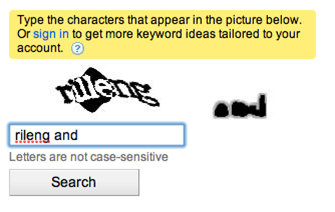
Once you have a solid list, type in the capcha and search.

At the top of the results you will find detail on each of the keywords that you typed in; below that Google will expand your list and provide up to 100 keyword ideas related to the terms entered. If you are just learning SEO some of these results may be surprising to you.


Next, click the “Local Monthly Searches” header to sort both lists by the average amount of times the term has been searched in your country or language.


Then scan the list for keywords keywords that:
     are highly relevant to your business
     contain a low to medium competition ranking
     have a sizable number of local monthly searches

The competition ranking is speaking to the competitiveness of the term as it relates to PPC advertising, but it can be generally related to SEO as well.


If you would like to save your favorite keywords, check them off and click the download drop down menu followed by the selected option.  This will let you save your checked keyword list in a variety of formats.

Keyword research works best if you do several of these types of searches, constantly washing the keyword list that you build on subsequent expansions.

Once done you can then either use the final list of 5-10 keywords as the ones you are going to target, or use an SEO-specific tool to check the SEO competition for related terms. SEOMoz (paid) and the SEO SERP plugin for Google Chrome are great options for this.

To learn more about how to build an SEO foundation, check out Grovo’s expert series with Zach Ciperski, VP, Coffee For Less, Director of SEO, Elite SEM.

In this video series Zach covers a variety of topics, including:
     A history of SEO
     Choosing the right keywords
     Onsite SEO optimizations
     Creating SEO friendly content
     Basic link building
     Social media SEO
     Video SEO
     User experience and SEO
     Mobile SEO

Special Thanks to Nick Narodny, Co-founder, SVP of Business Training for Grovo for sharing his expertise with the readers of the Marketing Blog!


See you at the top,
Mike Fleischner